Trailer brakes need internal inspection
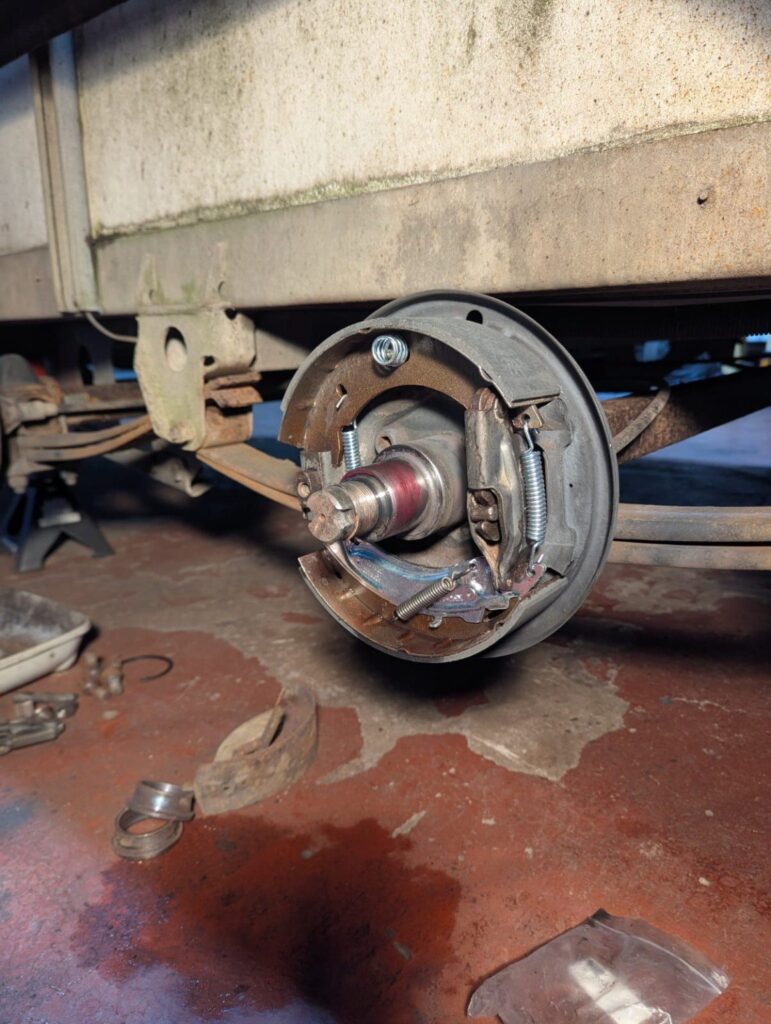
A brake can appear to operate while internal components are badly corroded, partially seized or wearing unevenly. Our workshop approach is to inspect the mechanism properly when symptoms or service requirements justify drum removal.
The supplied CSTSC workshop photography includes real examples of corroded shoes and backplates, replacement AL-KO components and rebuilt brake assemblies.
Brake faults we investigate
Poor braking, brakes that grab, wheels that drag after the handbrake is released, uneven braking, excessive handbrake travel, overheating drums, seized cables, broken or weak springs and corroded internal mechanisms are all reasons for further investigation.
Adjustment alone is not a cure for damaged or seized components. The condition of the drum, shoes, springs, expander, adjuster, cable and hub/bearing arrangement all matter.
Overrun braking systems
On a braked trailer the coupling, drawtube, damper, linkage, cables and wheel brakes have to work together. We can inspect faults in the overrun system as part of brake diagnosis.
Central Scotland Trailer Servicing Centre is workshop-based in Tillicoultry and is operated by JRGM Technical Services LLP.
Frequently asked questions
Why do trailer brakes seize after storage?
Moisture, corrosion, sticking cables and brake mechanisms can develop while a trailer stands. Applying the handbrake for long storage periods can also leave components under tension; follow the trailer manufacturer’s storage guidance.
Can you replace AL-KO brake shoes?
We work on common trailer braking systems including AL-KO components where the correct parts are identified and available.
Why is one trailer wheel getting hot?
A hot wheel can be caused by a dragging brake, bearing problem or another mechanical fault. Stop using the trailer until the cause is understood if the wheel or hub is becoming abnormally hot.